Plasma removal of surface lesions
Warts, skin tags and surface marks removed point by point with plasma — always after a doctor has seen the lesion. Moles are not treated here.
How it worksPlasma applied to the lesion to dry it in a controlled way, without cutting the skin.
- Rhythm
- A short, one-off session; sometimes a second pass, once the area has healed.
- Back to normal
- A visible crust for a few days on the treated area.
- Price
- Agreed at the free assessment. Why there is no fixed price list →
What it is
Plasma can remove surface skin lesions — warts, skin tags, soft fibromas, keratoses and surface marks — working point by point on the lesion itself, with no scalpel, no cuts and no stitches.
The lesion dries, forms a crust and that crust falls off on its own. Small lesions usually need a very brief moment; larger or deeper ones may need more than one pass, and that is said beforehand.
And here is the important part, without dressing it up: an aesthetic centre does not diagnose. Any lesion that has changed colour, size or shape, that bleeds, that itches, or that you are not sure about, has to be seen by a dermatologist first. If there is doubt, it is not touched.
Who it is for
- Warts, skin tags and soft fibromas already assessed by a doctor
- Cherry angiomas and small benign surface lesions
- Surface marks, depending on their type
- Lesions in visible areas where a scalpel scar would be a nuisance
Better to wait, or to check first, if…
- Any undiagnosed lesion, or one that is changing, bleeding, itching or growing: that is an appointment with the dermatologist, not with us
- Moles. Moles are not touched here, full stop
- Lesions on mucous membranes, and genital, anal, plantar or nail-fold warts and papillomas: those are medical territory
- Higher phototypes and skin prone to pigmenting, without a specific assessment
- Tanned skin, or unavoidable sun exposure coming up
- Pregnancy and breastfeeding
- A tendency to keloids, uncontrolled diabetes, ongoing cancer treatment, immunosuppressive treatment or active autoimmune disease
- Current or recent isotretinoin
- Anticoagulant treatment or clotting disorders, without your doctor’s go-ahead
- Epilepsy and known allergy to topical anaesthetics
- Active infection or a herpes flare-up in the area
- A pacemaker or other implanted electronic devices
This is the rule that is not up for negotiation: if the lesion has not been diagnosed, the dermatologist comes first. Removing something without knowing what it is can erase information a doctor needed to see.
The session, step by step
- 01
Assessing the lesion
We look at the lesion and decide whether to proceed or to refer you to a dermatologist first. If there is the slightest doubt, we refer.
- 02
Cleansing and topical anaesthetic
The area is disinfected and anaesthetic is applied, with its waiting time.
- 03
Applying the plasma
The lesion is worked point by point until it dries, with the depth controlled.
- 04
Finish and aftercare
The area is protected and you take the crusting-days instructions away in writing.
What it feels like
Brief pinpricks of heat and a small click at each point. The session is short, and on small lesions it is a matter of moments.
Before and after
Before you come
- If a doctor has not seen the lesion, go to a dermatologist first
- No sun or fake tan on the area before the session
- Come with the area clean and free of creams
- Choose the date knowing there will be a visible crust for a few days
After the session
- The crust falls off by itself. Do not touch it, scratch it or pick it
- Keep the area clean and dry as instructed
- No pool, sauna, beach or heavy sweating while the crust lasts
- High sun protection for a good while afterwards: that is what stops a mark forming
- It is normal for the new skin to look pink at first and even out gradually
When you see it
When the crust comes off, new, lighter, pinker skin appears, and it evens out in tone over time and with sun protection. Firmer lesions may need another session, assessed once the area has healed.
What it does not do
- It does not diagnose anything: nobody here tells you whether a lesion is benign or not
- It does not replace dermatology or a biopsy
- It does not treat moles
- It does not guarantee the lesion will not come back: viral warts, for instance, can recur
- It is not a mark-free treatment: there are always a few days of crusting
Also in Cold plasma / plasma pen
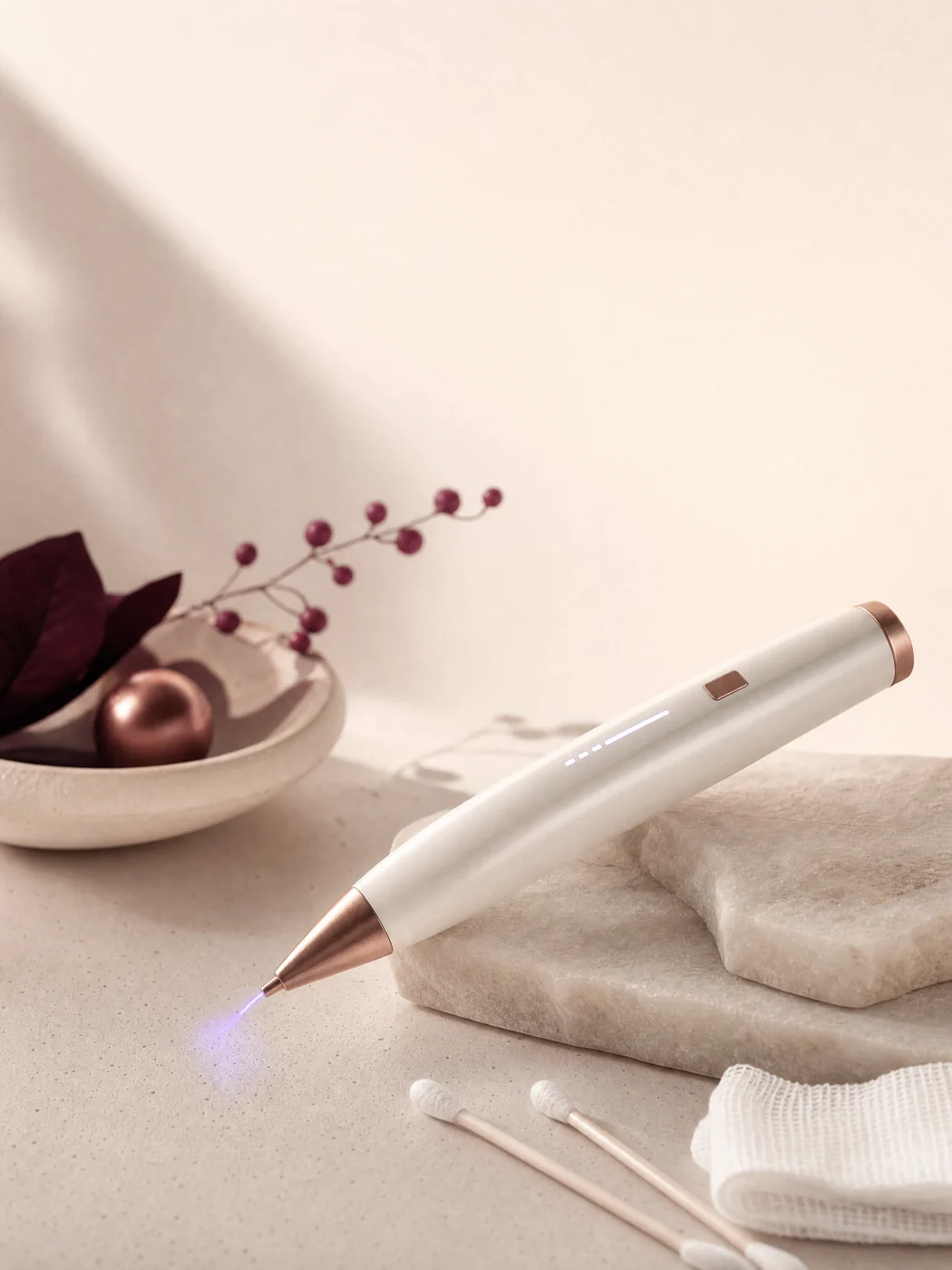
Plasma eyelids
Plasma points that tighten the eyelid without cutting or stitching. The most visible recovery in the centre, and we say so before you book.
Plasma · tightening
A grid of plasma points to tighten lines on the forehead, lip and neck, and to work on mature stretch marks. Stretch marks are scars: they improve, they do not disappear.