Chemical peel
Accelerated renewal of the surface layer to even out tone and texture. What matters is not the peel — it is choosing the right one.
How it worksAccelerated, controlled renewal of the surface layer of the skin to even out tone and texture.
- Rhythm
- A course of sessions, with preparation beforehand when the skin calls for it.
- Back to normal
- Redness and then flaking while the skin renews.
- Price
- Agreed at the free assessment. Why there is no fixed price list →
What it is
A peel applies a solution that speeds up the renewal of the skin’s surface layer. As that worn layer comes away, more even skin appears: tone looks more uniform, texture smoother, and the light comes back.
What matters is not the peel, it is the indication. The solution, its concentration and how long it is left on depend on your skin type, your phototype and the time of year. The same peel that suits one skin perfectly leaves another with a new patch. So here it is assessed first and, if your skin needs a few weeks of preparation, it gets prepared.
The intimate area is also treated, where the aim is to even out tone and improve texture. It is a more delicate area, with its own protocols and aftercare.
Who it is for
- Uneven tone and dull skin
- Surface pigmentation, depending on its type and origin
- Rough texture and visible pores
- Surface marks after an acne breakout
- Intimate area: evening out tone and improving texture
Better to wait, or to check first, if…
- Tanned skin or recent sun exposure
- Pregnancy and breastfeeding
- Active herpes, wounds, eczema, psoriasis or dermatitis in the area
- Recurrent herpes around the mouth: talk to your doctor first, because a peel can reactivate it
- Current or recent isotretinoin
- Higher phototypes and melasma without a specific assessment: a badly indicated peel here can make the patch worse
- Recent laser, hair removal, waxing or surgery in the area
- Known allergy to any of the components, salicylates and aspirin included
- A tendency to keloids and to post-inflammatory hyperpigmentation
- Uncontrolled diabetes, autoimmune disease in an active phase and ongoing cancer treatment
- Undiagnosed lesions or marks: a dermatologist looks at those first, and we never peel over them
- In the intimate area: an ongoing vaginal or urinary infection, recent hair removal, lesions or pregnancy
Peels and sun are incompatible. If you cannot commit to strict sun protection afterwards, it is better to wait for another time of year.
The session, step by step
- 01
Assessment and phototype
We study your skin, your phototype and your history of pigmentation. That decides which peel is appropriate and whether your skin needs preparing first.
- 02
Cleansing and degreasing
The skin is cleaned and prepared so the solution acts evenly.
- 03
Controlled application
It is applied by area and the time is controlled. The skin’s reaction is watched throughout.
- 04
Neutralising
The action is stopped at the right moment. Not before, not after.
- 05
Calming and protection
The skin is calmed and you leave with high sun protection. Here the home aftercare is part of the treatment.
What it feels like
Stinging and heat while the solution works, stronger on thin areas and around the nose. It is a passing, controlled sensation, and you are told at every moment what is about to happen.
Before and after
Before you come
- No sun, sunbeds or fake tan before the session
- Stop retinol, acids and exfoliants in the days before
- Do not wax or have laser in the area before the appointment
- If you get recurrent cold sores, say so beforehand
- If we have prescribed preparation, do it: it is not an extra, it is part of the treatment
After the session
- Redness and tightness at first; then flaking
- Do not pull off the flaking skin, however tempting: that is what leaves marks
- High sun protection, every day and reapplied. No exceptions
- No sauna, pool, intense exercise or heat while the skin renews
- Moisturise with what we tell you and do not introduce new actives until you are discharged
When you see it
The skin looks better once the flaking finishes and the new skin is visible. It is usually planned as a course of sessions, gaining ground without overloading the skin.
What it does not do
- It does not erase deep or hormonal pigmentation in one go: melasma in particular is something to live with and control, not to eliminate
- It does not correct marked scars or pores with relief
- It does not bleach the skin: it evens out tone
- It does not work if you do not protect from the sun afterwards. It really is that simple
Also in Facial & technology
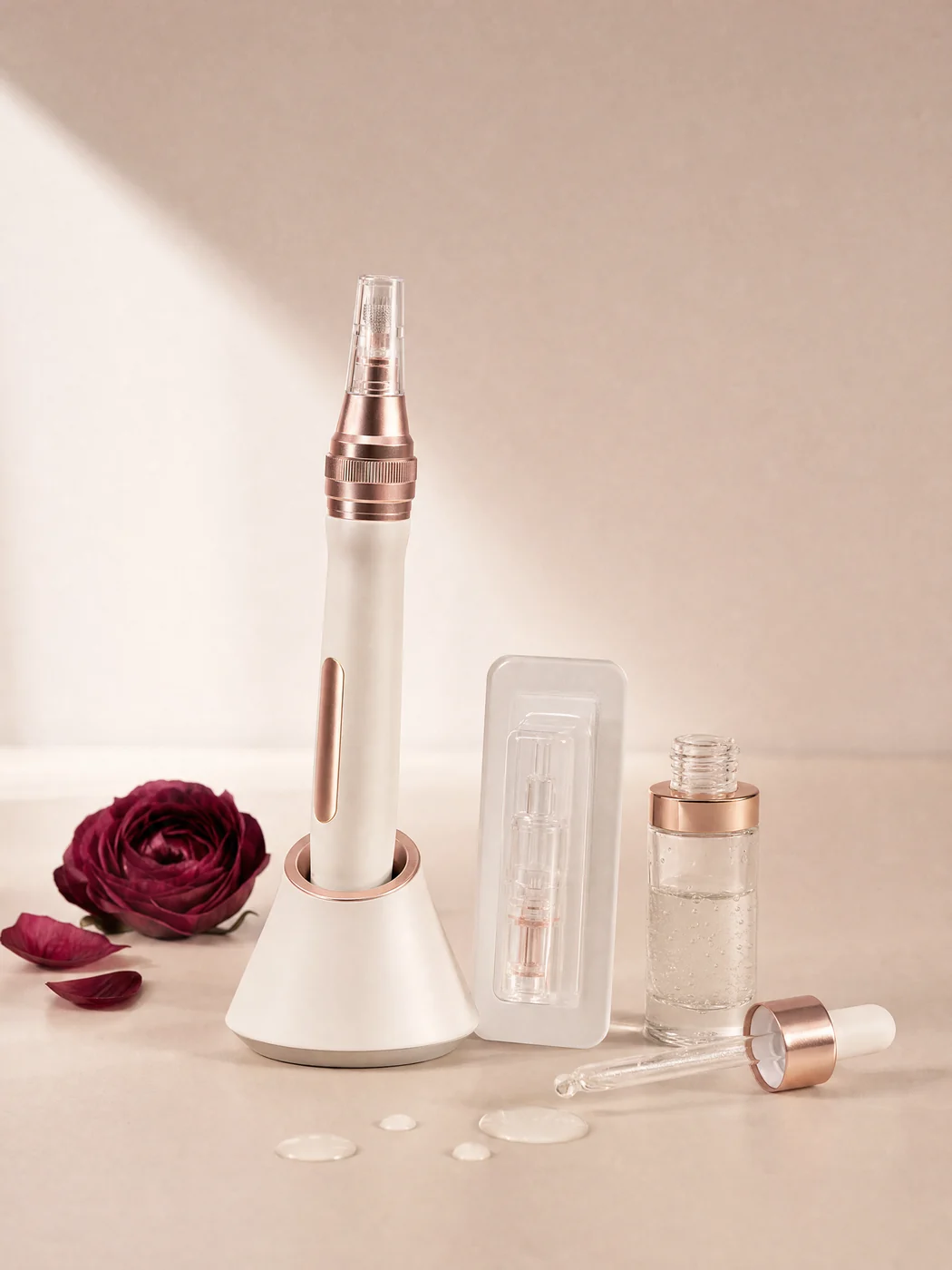
Dermapen facial
Stimulates the skin’s own repair: fine lines, texture, tone and healed acne marks. Active ingredients and your own collagen.
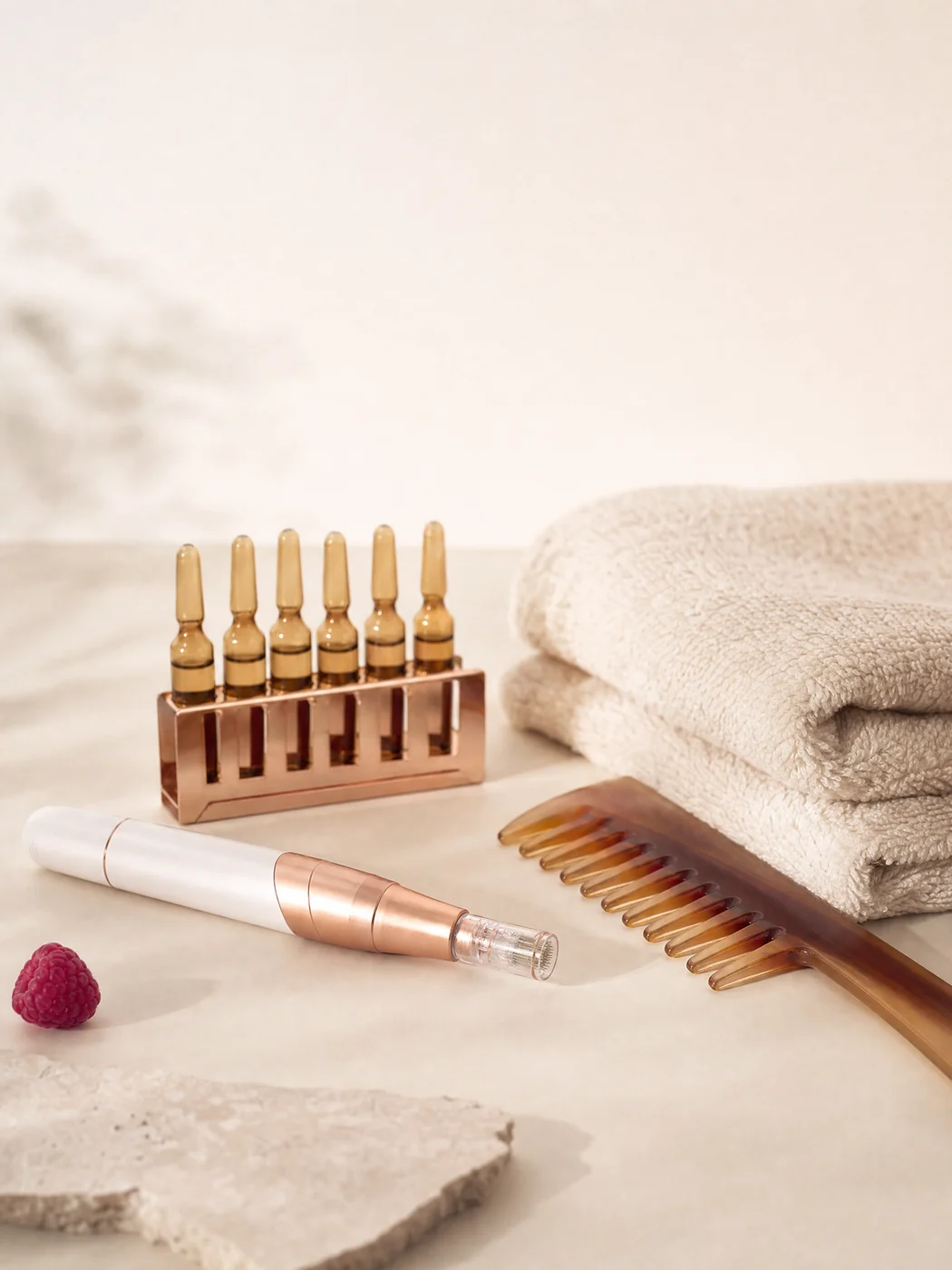
Scalp Dermapen
Microneedling on the scalp as cosmetic support for weakened hair. It does not diagnose or treat hair loss — that belongs to a dermatologist.
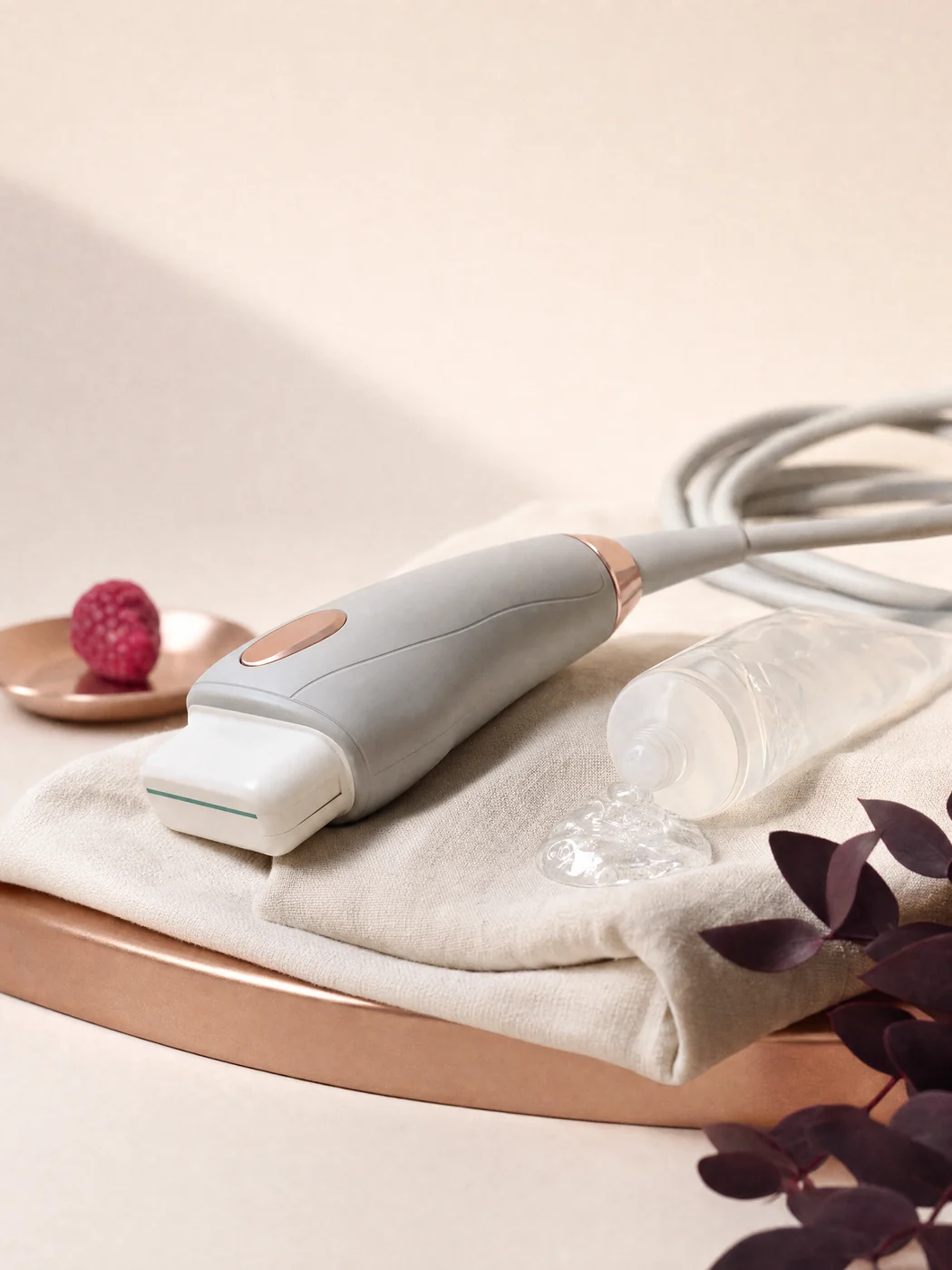
HIFU facial
Focused ultrasound that tightens the jawline and neck. A lifting effect without surgery.